For Muslims trying to lower their gaze, the challenge isn't limited to deliberately searching for inappropriate content.
Modern mobile browsing can constantly place visual content in front of you. A social media feed may load another photo as you scroll. A video may autoplay. Search results can contain image previews, and websites can display visual content you never specifically chose to see.
This creates an interesting question: Can technology help Muslims reduce unnecessary visual exposure while browsing?
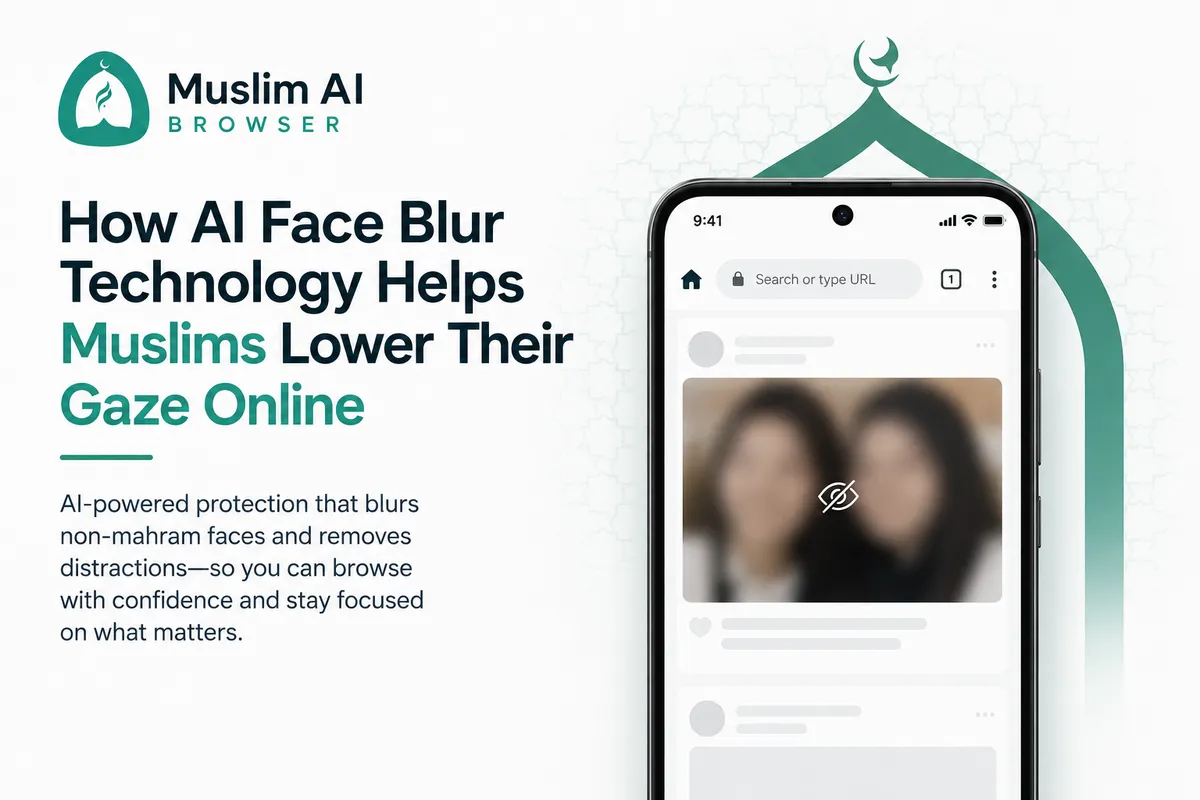
One approach is AI-powered face blur. By detecting human faces in images and videos and applying a blur automatically, this technology can add another layer of control to the browsing experience.
For Muslim users, especially those who want to make their everyday phone use more intentional, this can be a useful part of a broader approach to lowering the gaze.
What Is AI Face Blur?
AI face blur is a computer-vision technology that detects human faces within visual content and applies a blur effect to the detected areas.
The important distinction is that the AI is detecting faces, not determining whether someone is mahram or non-mahram according to Islamic law.
The Islamic context comes from how the technology is used.
A Muslim may choose to use face blurring as a practical tool to reduce unnecessary exposure to people's faces while browsing social media, websites and other online content.
A simple way to describe it is:
AI face blur detects faces in visual content and automatically applies a blur, helping users reduce unwanted visual exposure while browsing.
It is a technology-based layer of protection, not a replacement for personal responsibility or Islamic guidance.
How Does AI Face Blur Actually Work?
The underlying technology is computer vision, a branch of artificial intelligence that allows computers to analyze and identify patterns in images and video.
Face-detection models are trained to recognize visual patterns associated with human faces. Similar technology is already used in areas such as photography, security systems and accessibility tools.
A simplified face-blurring process looks something like this.
1. Visual Content Appears
An image or video appears while you're browsing a website or social media feed.
2. The AI Analyzes the Content
The computer-vision system examines the visual content and looks for regions that resemble human faces.
3. Detected Faces Are Blurred
When a face is detected, the system applies a blur effect over that area.
The rest of the image can remain visible while the detected face is obscured.
4. The Process Continues
With video, the system needs to continue analyzing new frames as the video plays.
This allows the blur to follow faces rather than applying an effect only to a single thumbnail or still image.
Why Does Real-Time Face Blur Matter?
Timing makes a significant difference when dealing with online visual content.
Consider scrolling through a social media feed. New images and videos can appear one after another, often without you deliberately choosing each piece of content.
A filter that reacts only after the content has already been visible for a significant amount of time would be less useful.
Real-time processing aims to detect visual content as it appears and apply the blur quickly.
The purpose isn't to make every browsing decision for you. Instead, it can reduce the amount of unwanted visual content that reaches your attention during ordinary browsing.
This can be especially useful on mobile devices, where scrolling through feeds and watching short videos can expose users to a large amount of automatically recommended content.
How Can Face Blur Help Muslims Lower Their Gaze?
Lowering the gaze is ultimately a matter of personal intention and action. Technology cannot replace that.
But technology can help with one specific problem: unintentional exposure.
You may open your phone to read something useful and encounter an unexpected image. You may check a social media post and find several unrelated faces in the feed. You may visit a website for information and encounter visual content you did not intend to see.
In these situations, automatic visual filtering can create an additional barrier between the content and your attention.
It doesn't mean you can stop being careful about what you view.
Rather, it supports an existing intention:
You want to control what you look at, and technology can help reduce some of the content you encounter unintentionally.
Where Can Face Blur Be Useful on Mobile?
AI-powered visual filtering can be particularly useful in environments where content changes quickly.
Social Media Feeds
Social media platforms continuously recommend images and videos as you scroll.
You don't necessarily choose every image that appears in front of you.
Face blur can provide an additional layer of visual filtering in this type of environment.
Short-Form Videos
Short videos can autoplay one after another, making it difficult to predict what will appear next.
Automatic face detection can help reduce exposure to faces within the content being displayed.
Image Search
Search engines can display image previews alongside ordinary search results.
Even when you're looking for information rather than photographs, visual content can still appear on the screen.
Websites
Many websites contain images, advertisements, embedded videos and other visual elements.
A visual filtering system can help reduce unwanted exposure without requiring you to manually inspect every part of a page first.
How Is AI Face Blur Different from Blocking a Website?
Website blocking and visual filtering solve different problems.
A website blocker might prevent you from accessing an entire domain or category.
That can be useful when a particular website itself is the problem.
But what happens when a website contains both useful and unwanted content?
For example, you may want to use a social platform to communicate with family, follow an educational page or access beneficial information. At the same time, the feed may contain visual content you didn't intentionally choose.
Blocking the entire platform would also block the useful content.
Visual filtering takes a more targeted approach. Instead of deciding that an entire website should be blocked, it can analyze the visual content that appears within the browsing experience.
This makes the two approaches complementary rather than interchangeable.
Why AI-Based Filtering Can Be Useful for Muslim Browsing
The modern internet is increasingly recommendation-driven.
You don't always decide what appears next.
Algorithms recommend posts. Videos autoplay. Search engines display previews, and websites contain advertisements and embedded media.
That means responsible browsing isn't only about what you deliberately search for.
It's also about how you deal with content that appears unexpectedly.
AI-based visual filtering can provide a technical layer between recommendation systems and the user's attention.
For a Muslim who is trying to build better digital habits, this can be one small part of creating a more intentional browsing environment.
What Are the Limitations of AI Face Blur?
No AI detection system is perfect.
Face detection can be affected by factors such as:
- Image quality
- Lighting
- Camera angle
- Faces partially covered by objects
- Unusual poses
- Heavy image editing
- Highly stylized images
Video can introduce additional challenges because faces need to be detected continuously as frames change.
Some faces may be detected correctly while others may not be.
This is why AI face blur should be considered a supporting tool, rather than a guarantee that every unwanted visual element will always be hidden.
The technology can reduce exposure, but users still need to remain aware of what they are viewing.
Can AI Face Blur Replace Lowering the Gaze?
No.
This is perhaps the most important point.
Lowering the gaze is not simply a technical problem that can be solved with an app or an AI model. It involves intention, awareness and personal choices.
A user can still:
- Look away from inappropriate content
- Stop scrolling
- Close a page
- Leave a platform
- Avoid content intentionally
- Choose more beneficial online activities
Face blur can support those choices by reducing some unwanted visual exposure before it becomes something the user has to consciously deal with.
Think of it as a digital guardrail, not a replacement for self-discipline.
How Muslim Browser Can Support a More Controlled Browsing Experience
Muslim Browser is designed specifically for Android users who want a more controlled and mindful way to browse the internet.
Instead of treating online safety as only a matter of blocking websites, a Muslim-focused browser can bring multiple protective features into the browsing experience itself.
Visual filtering is one example of how technology can support users who want to reduce unwanted exposure while browsing.
The broader idea is simple: your browser should help you use the internet according to your intentions, rather than making it harder to maintain them.
For someone trying to make their phone use more intentional, features such as visual filtering can work alongside responsible browsing habits.
Frequently Asked Questions
What is AI face blur?
AI face blur is a computer-vision technology that detects human faces in images or videos and applies a blur effect to those areas.
Does AI face blur know who is mahram or non-mahram?
No. Face-detection AI identifies visual patterns associated with human faces. It does not determine someone's Islamic relationship to the viewer. The Islamic use case comes from using the technology to reduce unnecessary exposure to faces.
Does face blur work on videos?
AI face-detection systems can process video frame by frame, allowing detected faces to be blurred as the video changes.
Can AI detect every face?
No. Detection can vary depending on image quality, lighting, camera angle, occlusion and other factors.
Is face blur enough to lower the gaze?
No. It can help reduce unwanted visual exposure, but it doesn't replace personal responsibility, awareness or the decision to look away from inappropriate content.
Is AI face blur the same as blocking a website?
No. Website blocking prevents access to a website or category, while visual filtering focuses on specific visual content within a page.
Can face blur be useful on social media?
Yes. Social media feeds are a particularly relevant use case because images and videos can appear continuously without being specifically requested by the user.
Does Muslim Browser support iPhone?
Muslim Browser is currently available for Android. An iOS version is planned for the future, but it should not be described as currently available until it is officially released.
Making Mobile Browsing More Intentional
The internet isn't going to stop becoming more visual. Social feeds, recommendations, short videos and image-heavy websites are now a normal part of using a smartphone.
For Muslims who want to lower their gaze, that makes intentional digital habits increasingly important.
AI face blur doesn't solve the entire problem, and it shouldn't be presented as if it does. What it can do is reduce some of the unwanted visual exposure that happens during everyday browsing and give users another layer of control over their digital environment.
Muslim Browser takes this broader approach on Android by creating a browsing experience built around more mindful and controlled internet use. Combined with personal discipline and conscious choices, technology can make it easier to use your phone in a way that better reflects the values you want your digital life to follow.